
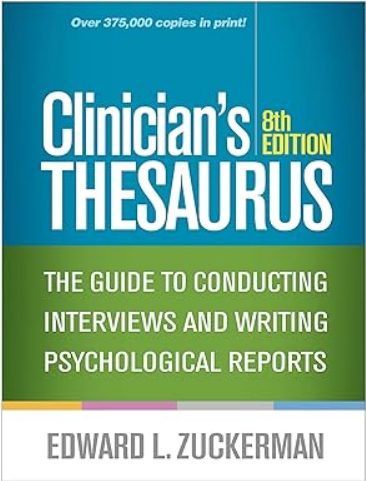
Clinician’s Thesaurus: The Guide to Conducting Interviews and Writing Psychological Reports 8th Edition, ISBN-13: 978-1462538805
Original price was: $50.00.$14.99Current price is: $14.99.
Safe & secure checkout
Description
Description
Clinician’s Thesaurus: The Guide to Conducting Interviews and Writing Psychological Reports 8th Edition, ISBN-13: 978-1462538805
[PDF eBook eTextbook] – Available Instantly
- Publisher: The Guilford Press; Eighth edition (April 16, 2019)
- Language: English
- 400 pages
- ISBN-10: 1462538800
- ISBN-13: 978-1462538805
Hundreds of thousands of students and early-career professionals have relied on this authoritative report-writing tool, now updated for DSM-5/ICD-10-CM and newer types of evaluations. In a convenient 8″ x 10.5″ format, the book covers nearly all areas of concern addressed in intakes, evaluations, treatment plans, progress notes, and closing summaries. The user seeking the right wording for a clinical document can skim and select from thousands of technical terms, behavioral descriptors, and standard statements. Also provided are interview questions for almost every symptomatic behavior, a huge collection of mental status questions, a reproducible Mental Status Evaluation summary form, and links to hundreds of internet resources. The companion website offers all the URLs from the book, the reproducible forms, and a handy reference on current psychiatric medications.
New to This Edition:
* A list of all psychiatric ICD-10 diagnoses (all of the codes in DSM-5, plus many more), including Z codes essential to a comprehensive biopsychosocial evaluation.
* Sample evaluation report keyed to the book’s chapters.
* Sections on additional clinical issues: intimate partner violence, gender identity, human trafficking, recovery-oriented language, and more.
* Many more Internet links, including a wide variety of screening and assessment tools.
Table of Contents:
Half Title Page
Title Page
Copyright
About the Author
Contents
Acknowledgments and an Invitation
Getting Oriented to the Clinician’s Thesaurus
What Is the Clinician’s Thesaurus and What Does It Do?
How This Book Is Organized
Internet Resources in the Clinician’s Thesaurus
Understanding the Style and Format of the Chapters
Example of a Report Constructed with the Clinician’s Thesaurus
Some Ways to Use the Clinician’s Thesaurus
A Cautionary Note and Disclaimer
A Functional Guide to Report Construction
The Nature of Reports, the Steps of Their Construction, and the Corresponding Portions of the Clinic
Sample Report Using the Clinician’s Thesaurus
Further Guidelines and Advice on Report Writing
Part I. Conducting a Mental Health Evaluation
1. Beginning and Ending the Interview
1.1. Structuring the Interview
1.2. Introducing Yourself and Noting Possible Communication Difficulties
1.3. Assessing the Client’s Understanding of the Interview Situation
1.4. Obtaining Informed Consent
1.5. Other Points for All Interviews
1.6. Eliciting the Chief Concern/Complaint/Issue
1.7. Eliciting the Client’s Understanding of the Problem
1.8. Dimensionalizing the Concern/Problem
1.9. Ending the Interview
1.10. Collections of Tools for Screening and Monitoring
2. Mental Status Evaluation Questions/Tasks
2.1. Introduction to the Mental Status Questions
2.2. Background Information Related to Mental Status
2.3. Rancho Los Amigos Cognitive Scale
2.4. Screening Tests for Cognitive Impairment
2.5. Orientation
2.6. Attention
2.7. Concentration
2.8. Comprehension of Language
2.9. Eye–Hand Coordination/Perceptual–Motor Integration/Dyspraxia/Constructional Ability
2.10. Memory
2.11. Fund of Information
2.12. Opposites
2.13. Differences
2.14. Similarities/Analogies
2.15. Absurdities
2.16. Calculation Abilities
2.17. Abstract Reasoning/Proverbs
2.18. Paired Proverbs
2.19. Practical Reasoning
2.20. Social Judgment
2.21. Decision Making
2.22. Self-Image
2.23. Insight into Disorder
2.24. Strengths and Coping
2.25. Mental Status Evaluation Checklist
3. Questions about Signs, Symptoms, and Other Behavior Patterns
3.1. Introduction to the Questions about Signs, Symptoms, and Behavior Patterns
3.2. Abuse (Nonsexual)/Neglect of an Adult (Partner or Elder)
3.3. Abuse (Sexual) of an Adult
3.4. Affect/Mood
3.5. Anxiety
3.6. Body Dysmorphic Disorder
3.7. Compliance–Noncompliance with Treatment
3.8. Compulsions
3.9. Delusions
3.10. Depression
3.11. Dissociative Experiences
3.12. Eating Disorders
3.13. Gay, Lesbian, and Bisexual Identity Inquiry
3.14. Gender Identity
3.15. Gender Identity: Transgender and Gender-Nonconforming
3.16. Hallucinations
3.17. Illusions
3.18. Impulse Control
3.19. Mania
3.20. Obsessions
3.21. Organicity/Cognitive Disorders
3.22. Pain, Chronic
3.23. Paranoia
3.24. Phobias
3.25. Self-Injury
3.26. Sexual History
3.27. Sleep
3.28. Substance Abuse: Drugs and Alcohol
3.29. Substance Use: Tobacco and Caffeine
3.30. Suicide and Self-Destructive Behavior
3.31. Violence
Part II. Standard Terms and Statements for Wording Psychological Reports
A. Introducing the Report
4. Beginning the Report: Preliminary Information
4.1. Heading and Dates for the Report
4.2. Sources of Information for the Report
4.3. Identifying Information about the Client
4.4. Self-Sufficiency in Appearing for Examination
4.5. Consent Statements
4.6. Reliability/Validity Statements
4.7. Confidentiality Notices
4.8. Ethical Considerations in Report Writing
5. Referral Reasons
5.1. Statement of Referral Reason
6. Background Information and History
6.1. History/Course of the Present Problem/Illness/Chief Complaint/Concern
6.2. Medical History and Other Findings
6.3. Personal, Family, and Social Histories, and Current Social Situation
6.4. Adjustment
6.5. Social History for a Disability Examination
6.6. Family Genogram/Family Tree/Pedigree
B. The Person in the Evaluation
7. Behavioral Observations
7.1. Appearance
7.2. Clothing/Attire
7.3. Movement/Activity
7.4. Speech Behavior
7.5. Other Behavioral Observations
8. Responses to Aspects of the Examination
8.1. Reaction to the Context of the Evaluation
8.2. Attention/Concentration/Effort
8.3. Response to the Methods of Evaluation/Tests/Questions
8.4. Persistence/Motivation
8.5. Relationship with the Examiner
8.6. Response to Success/Failure/Feedback
9. Presentation of Self
9.1. Dependency–Surgency
9.2. Presence/Style
9.3. Self-Image/Self-Esteem
9.4. Social Sophistication/Manners
9.5. Warmth–Coldness
9.6. Other Aspects of Self-Presentation
10. Emotional/Affective Symptoms and Disorders
10.1. General Aspects of Mood and Affects
10.2. Anger
10.3. Anxiety/Fear
10.4. Bipolar I Disorder
10.5. Bipolar II Disorder
10.6. Cyclothymia
10.7. Depression
10.8. Guilt/Shame
10.9. Mania
10.10. Panic
10.11. Seasonal Affective Disorder
10.12. Sexual Interest
10.13. Other Affects/Emotional Reactions
11. Cognition and Mental Status
11.1. No Pathological Findings: Summary Statements
11.2. Arithmetic
11.3. Attention
11.4. Concentration/Task Persistence
11.5. Consciousness Levels
11.6. Decision Making
11.7. Dementia
11.8. Executive Functions
11.9. Information
11.10. Insight
11.11. Intelligence and Cognition: Assessment
11.12. Intelligence Scores: Classifications
11.13. Memory
11.14. Moral/Social Judgment and Knowledge
11.15. Orientation
11.16. Reality Testing
11.17. Reasoning/Abstract Thinking/Concept Formation
11.18. Social Maturity
11.19. Stream of Thought
11.20. Test Judgment: Summary Statements
11.21. Other Summary Statements for Cognitive Components of Mental Status
12. Abnormal Signs, Symptoms, and Syndromes
12.1. Abuse
12.2. AIDS Dementia Complex
12.3. Attention-Deficit/Hyperactivity Disorder
12.4. Autism Spectrum Disorders
12.5. Body Dysmorphic Disorder
12.6. Chronic Fatigue Syndrome/Myalgic Encephalomyelitis
12.7. Compulsions
12.8. Delusions
12.9. Denial
12.10. Depersonalization and Derealization
12.11. Dual Diagnoses
12.12. Eating Disorders
12.13. Fetal Alcohol Syndrome
12.14. Gambling
12.15. Hallucinations
12.16. Hoarding
12.17. Hypochondriasis
12.18. Illusions
12.19. Impulse-Control Disorders
12.20. Intimate Partner Violence/Domestic Violence
12.21. Malingering
12.22. Obsessions
12.23. Pain Disorder/Chronic Pain Syndrome
12.24. Paranoia
12.25. Phobias
12.26. Postconcussive Syndrome
12.27. Posttraumatic Stress Disorder
12.28. Premenstrual Dysphoric Disorder
12.29. Rape Trauma Syndrome
12.30. Schizophrenia
12.31. Self-Injurious Behavior
12.32. Sexual Impulsivity/Addiction/Compulsion, Hypersexuality
12.33. Side Effects of Psychotropic Medications/Adverse Drug Reactions
12.34. Sleep Disturbances
12.35. Stalking
12.36. Substance Use, Abuse, and Dependence
12.37. Suicide
12.38. Trafficking in Persons
12.39. Violent Behaviors
13. Personality Patterns
13.1. Models of Personality Diagnosis
13.2. Adult Children of Alcoholic/Addicted Parents
13.3. Antisocial Personality
13.4. Authoritarian Personality
13.5. Avoidant Personality
13.6. Borderline Personality
13.7. Codependent Personality
13.8. Compulsive Personality
13.9. Dependent Personality
13.10. Dissociative Identity Disorder
13.11. Histrionic Personality
13.12. Narcissistic Personality
13.13. Normal/Healthy Personality
13.14. Obsessive Personality
13.15. Paranoid Personality
13.16. Passive–Aggressive Personality
13.17. Sadistic Personality
13.18. Schizoid Personality
13.19. Schizotypal Personality
13.20. Self-Defeating Personality
C. The Person in the Environment
14. Activities of Daily Living
14.1. Assessment
14.2. Assistance Level Required/Degree of Independence
14.3. Child Care
14.4. Chores/House Care/Domestic Skills
14.5. Cooking
14.6. Financial Skills
14.7. Hazard Recognition and Coping
14.8. Living Situation/Level of Support Needed
14.9. Quality of Performance
14.10. Self-Care Skills
14.11. Shopping
14.12. Transportation
14.13. Caregiver Burden
14.14. Summary Statements
15. Social/Community Functioning
15.1. General Lifestyle
15.2. Involvement in Social/Community Activities
15.3. Problems/Conflicts in Community Relating
16. Couple and Family Relationships
16.1. Systemic Family Constructs
16.2. Assessment of Families at Intake
16.3. Family Interviewing Method
16.4. Child Rearing/Raising: Aspects
16.5. Couple Relationships: Aspects
17. Vocational/Academic Skills
17.1. Basic Work Skills
17.2. History of Work
17.3. Language Skills: Reading and Writing Ability
17.4. Math Ability
17.5. Special Considerations for Disability Reports
17.6. Vocational Competence/Recommendations
18. Recreational Functioning
18.1. Entertainment: TV/Radio/Online Programming/Music
18.2. Hobbies
18.3. Sports
18.4. Reading Materials
18.5. Participation/Performance Quality
19. Other Specialized Evaluations
19.1. Bariatric Surgery
19.2. Coping Ability/Stress Tolerance
19.3. Culturally Sensitive Formulations
19.4. Financial Competence/Competence to Manage Funds
19.5. The Refugee Experience
19.6. Religious and Spiritual Concerns
D. Completing the Report
20. Summary of Findings and Conclusions
20.1. Overview
20.2. Beginning the Summary
20.3. Summary of Previous Information
20.4. Relevant Findings and/or Conclusions
20.5. Diagnostic Statement
20.6. Consultations and Further Evaluations
20.7. Summarizing Treatment
21. Diagnostic Statement/Impression
21.1. ICD and DSM
21.2. Introduction to the Reference List of Psychiatric Diagnoses
21.3. Qualifiers for Diagnosis
21.4. The Reference List of Psychiatric Diagnoses from ICD-10-CM
22. Recommendations
22.1. Need for Treatment/Medical Necessity of Treatment
22.2. Offering Effective Treatments
22.3. Treatment Options/Case Disposition
22.4. Types of Therapies/Services
23. Prognostic Statements
23.1. General Prognostic Statement
23.2. Other Statements
24. Closing Statements
24.1. Value of the Information
24.2. Thanking the Referrer
24.3. Continued Availability
24.4. Signature, Etc.
24.5. Disclaimer
Part III. Useful Resources
25. Treatment Planning and Treatment Plan Formats
25.1. The Flow and Nature of Treatment Planning
25.2. Some Advice on Writing Treatment Plans
25.3. Various Formats for Treatment Plans
25.4. A Treatment Plan Format for Case Conceptualization
25.5. Treatment Plan Components for Clients with Substance Abuse
25.6. Treatment Plan Components for Crisis Interventions
25.7. The Recovery Paradigm and Its Language
25.8. Checklist of Strengths
25.9. Outcome Measures/Goal Achievements
26. Formats for Reports, Evaluations, and Summaries
26.1. A Standard Format for Reports of Evaluations
26.2. Format for Psychodynamic Evaluations: Developmental Model
26.3. The Psychodynamic Diagnostic Manual–2 Format
26.4. Themes for Evaluations from an Existential Perspective
26.5. Formats for Therapy Notes
27. Listing of Common Psychiatric and Psychoactive Drugs
27.1. Lists of Medications by Trade and Generic Names
27.2. Street Drugs’ Names
27.3. Results of Medication Treatment: Descriptors
27.4. Drug Resources for the Clinician
28. Psychiatric Masquerade of Medical Conditions
28.1. Introduction
28.2. Anxiety
28.3. Sexual Dysfunction
28.4. Depression
28.5. Mania
28.6. Organic Brain Syndrome/Dementia
28.7. Psychosis
28.8. Medication-Induced Psychiatric Conditions
Appendices
A. Abbreviations in Common Use
A.1. Clinicians/Mental Health Professionals
A.2. Treatment
A.3. Diagnoses and Conditions
A.4. Relations
A.5. General Aids to Recording
A.6. Legal Terms
A.7. Medication Regimens
B. Annotated Readings in Assessment, Interviewing, and Report Writing
Assessment
Interviewing
Report Writing and Person-First Language
Feedback Solicitation Form
References
Index
What makes us different?
• Instant Download
• Always Competitive Pricing
• 100% Privacy
• FREE Sample Available
• 24-7 LIVE Customer Support