
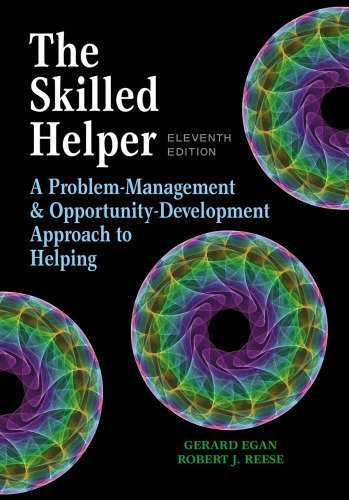
The Skilled Helper: A Problem-Management and Opportunity-Development Approach to Helping 11th Edition, ISBN-13: 978-1305865716
Original price was: $50.00.$14.99Current price is: $14.99.
Safe & secure checkout
Description
Description
The Skilled Helper: A Problem-Management and Opportunity-Development Approach to Helping 11th Edition, ISBN-13: 978-1305865716
[PDF eBook eTextbook] – Available Instantly
- Publisher : Cengage Learning; 11th edition (March 20, 2018)
- Language : English
- 480 pages
- ISBN-10 : 1305865715
- ISBN-13 : 978-1305865716
NOTE: This book is a standalone book and will not include any access codes.
THE SKILLED HELPER has taught thousands of students a proven, step-by-step counseling process that leads to increased confidence and competence. Internationally recognized for its successful approach to effective helping, the text emphasizes the collaborative nature of the therapist-client relationship and uses a practical, three-stage framework that drives client problem-managing and opportunity-developing action. This eleventh edition emphasizes the “power of basics,” like decision-making skills, which are the key ingredients of successful therapy. You’ll also gain a feeling for the complexity inherent in any helping relationship–but don’t let that reality intimidate you. The authors show you how to adopt a helping process to the needs of your clients. You’ll learn not just what you need to know and understand–but also what you need to DO to be an effective helper.
Table of Contents:
Cover Page
Title Page
Copyright Page
Preface and Guide to the 11th Edition
Dedication
A Chapter-by-Chapter Guide to the 11th Edition
Part I. The Power of Basics
Chapter 1. The Power of Basics: Explore the Ingredients of Successful Helping
. The Skilled Helper Model
1-1. Review the Roles of Both Formal and Informal Helpers
1-2. Appreciate the Power of Basics
1-3. Become Competent in the Key Ingredients of Successful Helping
1. Focus Primarily on the Client and the Contextual Factors of the Client’s Life
Determine Why Clients Seek Help
2. Define Success in Terms of Outcomes with Life-Enhancing Impact for the Client
3. Describe What an Effective Helper Looks Like
4. Develop a Working Alliance with the Client
5. Acquire the Communication Skills Needed to Engage in the Therapeutic Dialogue
6. Integrate the Basic Principles Related to Cognition, Behavior, and Emotions into the Helping Process
7. Use Feedback to Improve the Effectiveness of the Helping Sessions and Clients’ Change Efforts
8. Come to Grips with the Role That Beliefs, Values, Norms, and Moral Principles Play in the Helping Process
9. Help Clients Redo Poor Decisions and Make and Execute Life-Enhancing Decisions
10. Adopt a Treatment Model Aligned with the Universal Problem-Management Process
1-4. Move from Smart to Wise by Managing the Shadow Side of Helping
1-5. Embrace Uncertainty
Chapter 2. Review the Problem-Management & Opportunity-Development Process
Review the Stages of Problem Management and Opportunity Development
Help Clients Answer the Four Major Questions Dealing with Change
Help Clients Deal with the Tasks within Each of the Stages
Implementation: Help the Client Make It All Happen
Be Flexible in the Use of the Problem-Management Process
Move with Clients as They Start and Proceed Differently
Help Clients Engage in Each Stage and Task in Their Own Way
Help Clients Move Back and Forth between Stages and Tasks
Do Not Confuse Flexibility with Mere Randomness or Muddling Through
Learn from Different Versions of the Basic Problem-Management Process
See What a Design Thinking Approach to Helping Has to Offer
Be Ready to Explore Action Learning Approaches to Change
Help Clients Determine if They Are Ready for Change
Use the Problem-Management Framework as “BROWSER”
Use N = 1 to Continually Evaluate the Helping Process
Deal with the Shadow Side of Helping Models
See the Downside of a Lack of a Model or Framework for Change
Note the Confusion Caused by the Needless Multiplication of Helping Models
Avoid Fads and Irrational Forgetfulness
Do Not Fail to Share the Helping Model with Clients
Avoid Rigid Applications of Treatment Methods
Do Not Fail to Become Increasingly Effective by Assimilating the Best Findings of the Helping Professions
Chapter 3. Commit Yourself to the Helping Relationship and the Values That Drive It
Understand What Makes Helping Relationships Work
Start with the Importance of the Relationship Itself
See the Relationship as a Means to an End
Make the Relationship a Working Alliance
Get Off to a Good Start
Keep the Client’s Points of View and Preferences Center Stage
Approach the Relationship as a Forum for Relearning
Reimagine Helpers and Clients as Entrepreneurs
Determine the Key Values That Drive the Working Alliance
See Values as Tools of the Trade
Determine the Values Inherent to Successful Helping
Prize Respect as the Foundation Value
Avoid Behaviors Showing Disrespect
Engage in Behaviors Showing Respect
Make Empathy the Primary Orientation Value
Consider this Brief Overview of Empathy as a Value
See Empathy as a Two-Way Street
Embrace Empathy as Radical Commitment
Develop a Proactive Appreciation of Diversity as a Sense-of-the-World Value
Appreciate the Role of Culture, Personal Culture, and Values
Acquire Competencies Related to Client Diversity and Culture
Develop a Bias toward Action as an Outcome-Focused Value
Understand the Nature of Self-Efficacy
Promote Self-Responsibility by Helping Clients Develop and Use Self-Efficacy
An Amazing Case of Client-Initiated Action
Influence Clients to Embrace Self-Responsibility
Realize that Helping Is a Social-Influence Process
Accept Helping as a Natural, Two-Way Influence Process
Part II. The Therapeutic Dialogue: Master Communication and Relationship-Building Skills
Chapter 4. Therapeutic Presence: Tune In to Clients and Listen Carefully
Become Competent in the Communication Skills Needed in Helping
Make Dialogue Second Nature to Your Interactions with Clients
Turn Taking. 1.
Demonstrate Empathic Presence by Visibly Tuning In to Clients
Adopt Basic Guidelines for Visibly Tuning In to Clients
Use Nonverbal Behavior as a Channel of Communication
Learn to Read the Signals that Both You and Your Clients Are Sending
Make Active Listening the Foundation of Understanding
Avoid Forms of Poor Listening
Listen Carefully to Clients’ Stories in Terms of Experiences, Thoughts, Behaviors, and Feelings
Put It All Together by Listening to the Client’S Integrated Narrative
Process what You Hear in A Thoughtful Search for Meaning
Listen to Your Own Internal Conversation
Listen to the Key Ingredients of Successful Therapy
Listen to the Client
Listen to Your Own Thoughts, Feelings, and Behaviors
Listen to What’s Happening in the Relationship
Listen to the Flow of Communication Skills and Dialogue
Listen to the Two-Way Feedback between You and Your Client
Listen to the Decisions Being Made
Listen to the Key Assumptions, Beliefs, Values, Norms, and Ethical Issues in Play
Listen to the Problem-Management Process Embedded in Whatever Treatment Model You Use
Identify and Deal with All Forms of Distorted Listening
Filtered Listening
Chapter 5. Empathic Responding: Work at Mutual Understanding
Understand the Importance of Responding Skills in Developing Relationships with Clients
Respond Skillfully to What Clients Say Verbally and Nonverbally
Use Empathy as a Communication Skill to Develop Your Relationships
Take a Wide View of Empathy as a Communication Skill
Become Adept in the Three Dimensions of All Responding Skills: Perceptiveness, Know-How, and Assertiveness
Develop Perceptiveness as the Foundation of Responding Skills
Learn the Basic Know-How of Responding Well
Be Assertive in Responding to Clients
Become Competent in the Know-How of Communicating Empathy
Start with the Basic Formula for Communicating Empathy
Respond Accurately to Clients’ Feelings, Emotions, and Moods
Respond Accurately to the Key Experiences, Thoughts, and Behaviors in Clients’ Stories
Adopt Useful Tactics for Responding with Empathy
Respond Selectively to Core Client Messages
Respond to the Context, Not Just to the Words
Learn How to Recover from Inaccurate Understanding
Use Empathy Wisely to Achieve a Number of Therapeutic Goals
Use Empathy throughout the Helping Process
Use Empathic Responses as a Mild Social-Influence Process
Use Empathic Responses as a Way of Bridging Diversity Gaps
Review the Case of Alex, the Client, and Doug, the Helper
Explore the Shadow Side of Responding
No Response
Some Final Words
Chapter 6. Master the Art of Probing and Summarizing
Develop an Appreciation of the Power of Nudging
Become Competent in Various Types of Effective Probing
Use Both Verbal and Nonverbal Prompts
Learn and Use Different Types of Probing
Follow the Guidelines for Using Probes
Follow Probes with Empathic Responses
Provide Focus and Direction by Using Summaries
Use Summaries When They Add Value
Get Clients to Provide Summaries
Review the Use of Summaries and Probes in the Case of Marcus and Andrea
Come to Grips with the Shadow Side of Communication Skills
Keep in Mind that Communication Skills are Necessary but Not Sufficient
Distinguish Between the Helping Relationship and Helping Technologies
Find Ways of Developing Proficiency in Communication Skills
Chapter 7. Help Clients Challenge Themselves:
Understand the Basic Concept of Self-Challenge
Identify the Goals of Challenging
Help Clients Target Areas for Self-Challenge
Invite Clients to Challenge Their Blind Spots
Help Clients Identify Different Kinds of Unawareness
Explore Dysfunctional Awareness: Knowing, but Not Caring
Develop Specific Skills for Helping Clients Challenge Their Blind Spots
Provide Reality-Based Advanced Empathy When It Adds Value
Help Clients Get the Information They Need Even when It Is Challenging
Use Prudent Helper Self-Disclosure, but Sparingly
Be Careful in Making Suggestions and Giving Recommendations
Be Slow to Move to Confrontation
Find Ways to Provide Encouragement
Follow Guidelines for Effective Invitations to Self-Challenge
Earn the Right to Invite Clients to Challenge Themselves
Keep the Goals of Invitations to Client Self-Challenge in Mind
Do Not Force Clients into Decisions, but Do Provide Choice Structure
Be Tentative but Not Apologetic in the Way You Invite Clients to Self-Challenge
Help Clients Make Their Self-Challenges Clear and Specific
Invite Clients to Challenge Unused Strengths Rather than Weaknesses
Help Clients Build on Their Successes
Avoid Shadow-Side Blocks to Challenge
Avoid the “MUM Effect”
Recognize Helper Excuses for Not Inviting Clients to Challenge Themselves
PART III. The Stages and Tasks of the Problem-Management and Opportunity-Development Model
Chapter 8. The Action Arrow: Right from the Beginning Help Clients Turn Talk into Life-Enhancing Action
Understand the Importance of the Action Arrow
Find Ways of Helping Clients Move to Life-Enhancing Action
Help Clients Discover the Value of Action Intentions
Help Clients Overcome Procrastination
Help Clients Identify Unused Resources That Can Facilitate Action
Help Clients Find Incentives and Rewards for Action
Help Clients Develop Action-Focused Self-Contracts
Help Clients Find and Utilize Action-Focused Social Support
Help Clients Find People Willing to Challenge Them to Act
Use Feedback as a Way of Helping Clients Move to Life-Enhancing Action
Help Clients Use Checklists as a Way of Initiating Directional Action
Help Clients Identify Possible Obstacles to Action
Help Clients Deal with Inertia
Help Clients Deal with Entropy: The Tendency of Things to Fall Apart
Help Clients Avoid Imprudent Action
Understand How Reluctance and Resistance are Obstacles to Action
See Reluctance as Misgivings About Change
See Resistance as Reacting to Coercion
Use Guidelines for Helping Clients Deal with Reluctance and Resistance
Avoid Unhelpful Responses to Reluctance and Resistance
Develop Productive Approaches to Dealing with Reluctance and Resistance
Avoid Helper Reluctance and Resistance
Help Clients Tap into Their Resilience, the Ability to Bounce Back and Grow
Help Clients Discover Their Resilience
Encourage Both Bounce-Back Action and Steady-State Action
Understand Factors Contributing to Resilience
Note the Relationship of Resilience to Posttraumatic Growth
Help Clients Get Along without a Helper
Remember that Some Clients Choose Not to Change
Chapter 9. The Three Tasks of Stage I: Help Clients Tell the Story, the Real Story, and the Right Story
Prepare Yourself for Doing the Work of Stages I, II, and III
Review the Graphic of Stage I and Understand What Is Meant by the Term Task
Explore the Challenges Clients Face in Talking about Themselves
Review the Case that Will Be Used to Illustrate Stage I
Task A: Learn Ways of Helping Clients Tell Their Stories
Help the Client Feel Safe in the Helping Encounter
Learn How to Work with All Styles of Storytelling
Start where the Client Starts
Assess the Severity of the Client’s Problems
Help Clients Identify and Clarify Key Issues
Help Clients Explore the Context of Their Concerns
Help Clients Talk Productively about the Past
Right from the Beginning, Help Clients Spot Unused Opportunities
Help Clients See Every Problem as An Opportunity
As Clients Tell Their Stories, Help Them Search for Unused Resources
I-B: Use Self-Challenge to Help Clients Tell the Real Story
Determine the Real Story in the Case of Alisa
Help Clients Challenge the Quality of Their Participation
Consider the Wider Use of Self-Challenge
I-C: Help Clients Focus on the Right Story
Return to the Alisa-Rena Case
Apply the Principles for Helping Clients Choose Issues that Will Make a Difference in Their Lives
Use Self-Challenge to Help Clients Make the Right Decisions
Start Early with Links to Action
Chapter 10. Stage II: Help Clients Design and Set Problem-Managing Goals
Help Clients Determine what Kind of Change They Need or Want
Help Clients Distinguish Needs from Wants
Understand the Continuum between First-Order and Second-Order Change
Master the Art of Setting and Accomplishing Goals
Recognize the Power of Goal Setting
Remember that Therapy Is Both Art and Science
Appreciate the Role of Hope in Therapy
Become Competent in the Three Tasks of Stage II
II-A: Help Clients Discover Possibilities for a Better Future
Help Clients Focus on Their “Possible Selves”
Help Clients Tap into Their Creativity
Help Clients Engage in Divergent Thinking
Use Brainstorming Adaptively
Use Future-Oriented Probes
Help Clients Review Exemplars and Role Models as a Source of Possibilities
Review the Case of Brendan: Dying Better
II-B: Use Flexible Guidelines to Help Clients Set Goals
Help Clients Describe the Future They Want in Outcome Language
Help Clients Move from Broad Aims to Clear and Specific Goals
Help Clients Establish Goals that Make a Difference
Help Clients Formulate Realistic Goals
Help Clients Set Prudent Goals
Help Clients Set Sustainable Goals
Help Clients Choose Flexible Goals
Help Clients Choose Goals Consistent with Their Values
Help Clients Establish Realistic Time Frames for Accomplishing Goals
Remember that Goals can Emerge
II-C: Help Clients Commit Themselves to Their Goals
Review the Relationship of Self-Efficacy to Commitment: A Case
See the Three Tasks of Stage II as Triggers for Action
Task A: Developing Possibilities for a Better Future
Explore the Shadow Side of Goal Setting
Chapter 11. Stage III: Planning-Help Clients Design the Way Forward
Review the Three Tasks of Stage III
Review a Hospital Case that Highlights the Need for Stage-III Skills
III-A: Help Clients Develop Strategies for Accomplishing Their Goals
Use Brainstorming to Help Clients Discover Strategies
Use a Variety of Frameworks to Stimulate Clients’ Search for Strategies
Help Clients Find Social Support in Their Efforts to Change
Help Clients Determine the Skills Needed to Move Forward
Help Clients Use Possible Strategies as Links to Action
III-B: Help Clients Choose Best-Fit Problem-Managing Strategies
Learn Something about Choosing Strategies from Bud’s Amazing Design-Thinking Odyssey
Use Criteria for Choosing Goal-Accomplishing Strategies
Use Strategy Sampling as a Way of Getting the Right Package
Follow the Balance-Sheet Method for Choosing Strategies
Be Aware of the Shadow Side of Strategy Selection
III-C: Help Clients Turn Strategies into Viable Plans
Evaluate the Case of Frank: No Plan of Action
Understand How Plans Add Value to Clients’ Change Programs
Review Two Approaches to Shaping the Plan
Claudia’s Road to Leadership
Humanize the Mechanics of Problem Management and Opportunity Development
Build a Planning Mentality into the Helping Process Right from the Start
Adapt the Helping Process to the Style of the Client
Devise a Plan for the Client and Then Help the Client Tailor It to His or Her Needs
Help Clients Develop Contingency Plans
Come to Terms with the Explosion of Evidence-Based Treatments
Familiarize Yourself with General Well-Being Programs: Nutrition, Exercise, and Stress Reduction
In Choosing Evidence-Based Treatments, Start with Clients’ Needs
Learn the Value of Both Evidence-Based Practice and Practice-Based Evidence from the Evidence-Based Treatment Debate
Sometimes Evidenced-Based Treatments Do Not Work; Sometimes Non-Evidence-Based Treatments Do Work
One Final Reminder
References-11th Edition
Gerard Egan, Ph.D., is Emeritus Professor of Psychology and Organizational Studies at Loyola University of Chicago. He has written over a dozen books and currently writes in the areas of communication, counselling, business and organization effectiveness, management development, the management of innovation and change, leadership and organization politics and culture. He also conducts workshops in these areas and is a consultant at a variety of companies and institutions worldwide.
Robert J. Reese, Ph.D., is Professor and Chair of the Department of Educational, School and Counseling Psychology at the University of Kentucky. He teaches in the American Psychological Association accredited Counseling Psychology doctoral program and is directly involved with counselor training at the master’s and doctoral levels. He is a licensed psychologist. His research is focused in the areas of psychotherapy process/outcome, psychotherapy training and supervision and the use of telehealth technologies to increase the availability of mental health services for underserved populations. Dr. Reese has several publications in top counseling and psychotherapy professional journals.
What makes us different?
• Instant Download
• Always Competitive Pricing
• 100% Privacy
• FREE Sample Available
• 24-7 LIVE Customer Support