

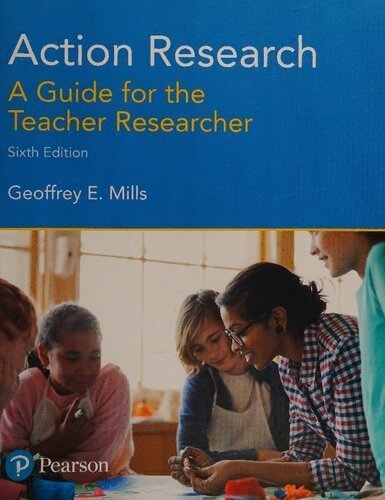
Action Research: A Guide for the Teacher Researcher 6th Edition by Geoffrey Mills, ISBN-13: 978-0134523033
Original price was: $50.00.$14.99Current price is: $14.99.
Safe & secure checkout
Description
Description
Action Research: A Guide for the Teacher Researcher 6th Edition by Geoffrey Mills, ISBN-13: 978-0134523033
[PDF eBook eTextbook] – Available Instantly
- Publisher: Pearson; 6th edition (January 4, 2017)
- Language: English
- 352 pages
- ISBN-10: 0134523032
- ISBN-13: 978-0134523033
A step-by-step guide to action research with a balanced coverage of qualitative and quantitative methods.
The leading text in the field of action research, Action Research: A Guide for the Teacher Researcher is known for its practical, step-by-step guidance for teachers on how to do research in classrooms. Drawing on his extensive experience working directly with teachers and principals to help them learn how to conduct action research studies, the author guides future educators through the action research process via numerous concrete illustrations. The text positions action research as a fundamental component of teaching and helps it’s readers not only acquire the skills to conduct quality studies, but also how to make it a part of everyday teaching practice.
Table of Contents:
About the Author
Preface
New to This Edition
The Role of Action Research in Effecting Educational Change
Conceptual Framework and Organization of the Text
Contents of This New Edition
Instructor Resources
Brief Contents
Contents
1 Understanding Action Research
A Brief Overview of Educational Research
Defining Action Research
Origins of Action Research
Theoretical Foundations of Action Research
Critical Action Research
Practical Action Research
Goals and Rationale for Action Research
Justifying Action Research: The Impact of Action Research on Practice
Action Research Is Persuasive and Authoritative
Action Research Is Relevant
Action Research Allows Teachers Access to Research Findings
Action Research Challenges the Intractability of Reform of the Educational System
Action Research Is Not a Fad
Making Action Research a Part of Daily Teaching Practices
The Process of Action Research
Summary
A Brief Overview of Educational Research
Defining Action Research
Origins of Action Research
Theoretical Foundations of Action Research
Goals and Rationale for Action Research
Justifying Action Research: The Impact of Action Research on Practice
Making Action Research a Part of Daily Teaching Practices
The Process of Action Research
Tasks
2 Ethics
The Ethics of Research
Institutional Review Boards and Action Researchers
Doing the Right Thing: The Role of Ethics in Action Research
Ethical Guidelines
Informed Consent and Protection from Harm
Deception
Personal Ethical Perspective
Social Principles
Accuracy
Summary
The Ethics of Research
Doing the Right Thing: The Role of Ethics in Action Research
Ethical Guidelines
Task
3 Deciding on an Area of Focus
Clarifying a General Idea and an Area of Focus
Criteria for Selecting a General Idea/Area of Focus
Reconnaissance
Gaining Insight into Your Area of Focus Through Self-Reflection
Gaining Insight into Your Area of Focus Through Descriptive Activities
Gaining Insight into Your Area of Focus Through Explanatory Activities
The Action Research Plan
Write an Area-of-Focus Statement
Define the Variables
Develop Research Questions
Describe the Intervention or Innovation
Describe the Membership of the Action Research Group
Describe Negotiations That Need to Be Undertaken
Develop a Time Line
Develop a Statement of Resources
Develop Data Collection Ideas
Put the Action Plan into Action
Summary
Clarifying a General Idea and an Area of Focus
Reconnaissance
The Action Research Plan
Tasks
4 Review of Related Literature
Action Research and the Review of Related Literature
Identifying Keywords and Identifying, Evaluating, and Annotating Sources
Identifying Keywords
Identifying Your Sources
Searching for Books on Your Research Topic in the Library
Using Library Catalogs
Browsing the Stacks
Steps for Searching Computer Databases
Education Resources Information Center (ERIC)
Education Full Text
Education Source
PsycINFO
Dissertation Abstracts
Searching the Internet and the World Wide Web
Becoming a Member of Professional Organizations
ASCD: Association for Supervision and Curriculum Development
NCTM: National Council of Teachers of Mathematics
NCSS: National Council for the Social Studies
NEA: National Education Association
NSTA: National Science Teachers Association
ILA: International Literacy Association
About ED—Educational State Contacts
Education Resource Organizations Directory
Evaluating Your Sources
Annotating Your Sources
Literature Matrix
Analyzing, Organizing, and Reporting the Literature
Summary
Review of Related Literature
Action Research and the Review of Related Literature
Identifying Keywords
Identifying Your Sources
Searching for Books on Your Research Topic in the Library
Steps for Searching Computer Databases
Searching the Internet and the World Wide Web
Becoming a Member of Professional Organizations
Evaluating Your Sources
Annotating Your Sources
Analyzing, Organizing, and Reporting the Literature
Tasks
5 Data Collection Techniques
Qualitative Data Collection Techniques
Experiencing Through Direct Observation
Participant Observation
Active Participant Observer
Privileged, Active Observer
Passive Observer
Field Notes
Observe and Record Everything You Possibly Can
Observe and Look for Nothing in Particular
Look for “Bumps” or Paradoxes
Enquiring: When the Researcher Asks
Informal Ethnographic Interview
Structured Formal Interviews
Focus Groups
E-Mail Interviews
Questionnaires
Examining: Using and Making Records
Archival Documents
Journals
Making Maps, Digital Recordings, and Artifacts
Construction of Maps
Digital Recordings
Artifacts
Quantitative Data Collection Techniques
Teacher-Made Tests
Standardized Tests
School-Generated Report Cards
Attitude Scales
Likert Scales
Semantic Differential
Triangulation
Realign Your Area of Focus and Action Research Plan When Necessary
Summary
Qualitative Data Collection Techniques
Experiencing Through Direct Observation
Enquiring: When the Researcher Asks
Examining: Using and Making Records
Quantitative Data Collection Techniques
Triangulation
Realign Your Area of Focus and Action Research Plan When Necessary
Tasks
6 Data Collection Considerations: Validity, Reliability, and Generalizability
Validity
Guba’s Criteria for Validity of Qualitative Research
Credibility
Transferability
Dependability
Confirmability
Wolcott’s Strategies for Ensuring the Validity of Qualitative Research
Talk Little; Listen a Lot
Record Observations Accurately
Begin Writing Early
Let Readers “See” for Themselves
Report Fully
Be Candid
Seek Feedback
Write Accurately
Reliability
The Difference Between Reliability and Validity
Generalizability
Personal Bias in the Conduct of Action Research
Propositions
Summary
Validity
Reliability
Generalizability
Personal Bias in the Conduct of Action Research
Tasks
7 Data Analysis and Interpretation
Ongoing Analysis and Reflection
Avoid Premature Action
The Role of Analysis and Interpretation
Qualitative Data Organization
Reading/Memoing
Describing
Classifying
Qualitative Data Analysis Techniques
Identifying Themes
Coding Surveys, Interviews, and Questionnaires
Analyzing an Interview
Asking Key Questions
Doing an Organizational Review
Developing a Concept Map
Analyzing Antecedents and Consequences
Displaying Findings
Stating What’s Missing
Using Computer Software to Assist with Data Analysis
Qualitative Data Analysis: An Example
Analyzing and Interpreting Quantitative Data
Why Use Descriptive Statistics?
Measures of Central Tendency
Measure of Variability: Standard Deviation
An Illustration
Be Careful About Your Claims
Data Analysis in Mixed-Methods Designs
Qualitative Data Interpretation Techniques
Extend the Analysis
Connect Findings with Personal Experience
Seek the Advice of “Critical” Friends
Contextualize Findings in the Literature
Turn to Theory
Know When to Say “When”!
Sharing Your Interpretations Wisely
Summary
Ongoing Analysis and Reflection
The Role of Analysis and Interpretation
Qualitative Data Analysis Techniques
Analyzing and Interpreting Quantitative Data
Qualitative Data Interpretation Techniques
Sharing Your Interpretations Wisely
Tasks
8 Action Planning for Educational Change
Developing Action Plans
Levels of Action Planning
Individual
Team
Schoolwide
Action Should Be Ongoing
The Importance of Reflection
Some Challenges Facing Teacher Researchers
Lack of Resources
Resistance to Change
Reluctance to Interfere with Others’ Professional Practices
Reluctance to Admit Difficult Truths
Finding a Forum to Share What You Have Learned
Making Time for Action Research Endeavors
Facilitating Educational Change
Teachers and Administrators Need to Restructure Power and Authority Relationships
Both Top-Down and Bottom-Up Strategies of Change Can Work
Teachers Must Be Provided with Support
Every Person Is a Change Agent
Change Tends Not to Be Neat, Linear, or Rational
Teacher Researchers Must Pay Attention to the Culture of the School
The Outcome of Any Change Effort Must Benefit Students
Being Hopeful Is a Critical Resource
What Do Teachers Gain Through All of This Work?
Summary
Developing Action Plans
Some Challenges Facing Teacher Researchers
Facilitating Educational Change
What Do Teacher Researchers Gain Through All of This Work?
Tasks
9 Writing Up Action Research
Why Should I Formally Write About My Action Research?
Format and Style
Sample Annotated Action Research Article
Rituals and Writing
Establishing a Writing Routine
An Outline for an Action Research Report
Other Structures in Action Research Reports
Submission Preparation Checklist
General Guidelines for Submissions to Journals
Choosing a “Journal” Style
APA Publication Manual Conventions
Punctuation
Preferred Spelling
Abbreviations
Reference Style
Self-Assessing Your Write-Up
Assessing an Article Using Rubric Criteria
Integrating Teaching, Research, and Writing
How Long Should the Write-Up Be?
For Submission to a Journal
For Distribution to Local Colleagues
Seeking Feedback
What’s in a Title?
It’s Memorable!
It Provides a Focus
Polishing the Text
Summary
Why Should I Formally Write About My Action Research?
Format and Style
Rituals and Writing
An Outline for an Action Research Report
Other Structures in Action Research Reports
General Guidelines for Submissions to Journals
Tasks
10 Evaluating Action Research
General Evaluation Criteria for Educational Research
Criteria for Evaluating Action Research
Applying Action Research Evaluation Criteria
Area of Focus
Research Questions
Locus of Control
Data Collection
Ethics
Reflective Stance
Action
Action-Data Connection
This Is Just the Beginning!
Summary
Criteria for Evaluating Action Research
Task
Appendix A Action Research in Action A Case Study of Curtis Elementary School and an Article Critique
The Setting: Curtis Elementary—A Professional Development School
The Area of Focus: Constructing Meaning in Reading
Reviewing the Literature
Creating an Action Plan
Defining the Variables
Research Question
Intervention
Membership of the Action Research Group
Negotiations to Be Undertaken
Time Line
Resources
Data Collection Ideas
Data Collection
Data Analysis and Interpretation
The Findings
Action Planning
Online Resources
Sharing the Findings
Evaluating Action Research
Final Thoughts
Summary
Tasks
Appendix B Standard Deviation and Action Research
Measure of Variability: Standard Deviation
An Illustration
The Standard Deviation
Appendix C Displaying Data Visually
Example 1: Writers’ Workshop and ESL Students’ Written Work and Attitudes
Example 2: Teaching Mathematics Using Manipulatives
Example 3: The Impact of Book Sharing on Student Motivation to Read
Example 4: Mapping Teachers’ “Locus of Control” and “Movement”
Example 5: Concept Map
Summary
References
Index
Geoffrey E. Mills. A native of Australia, Geoff moved to the USA in 1986 to undertake doctoral studies at the University of Oregon. After completing his PhD in 1988, Geoff accepted his first teaching position at Southern Oregon State College (now Southern Oregon University). After 12 years of teaching, Geoff moved in to university administration and as Dean of the School of Education at Southern Oregon University for 12 years. Geoff is currently a Professor of Education in the School of Education at Southern Oregon University where he teaches in the Educational Leadership Licensure Programs.
Geoff has traveled extensively and given invited action research presentations in Australia, New Zealand, Greenland, United Kingdom, Canada, Guam, Saipan, Palau, American Samoa, US Virgin Islands, the Marshall Islands, and many states in the US. In addition to Action Research: A Guide for the Teacher Researcher, Geoff is also the only active author of Educational Research: Competencies for Analysis and Applications (2016) now in its 11th Edition.
What makes us different?
• Instant Download
• Always Competitive Pricing
• 100% Privacy
• FREE Sample Available
• 24-7 LIVE Customer Support


Reviews
There are no reviews yet.