

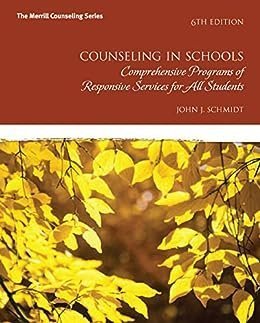
Counseling in Schools: Comprehensive Programs of Responsive Services for All Students 6th Edition, ISBN-13: 978-0132851718
Original price was: $50.00.$14.99Current price is: $14.99.
Safe & secure checkout
Description
Description
Counseling in Schools: Comprehensive Programs of Responsive Services for All Students 6th Edition, ISBN-13: 978-0132851718
[PDF eBook eTextbook]
- Publisher: Pearson; 6th edition (February 18, 2013)
- Language: English
- 384 pages
- ISBN-10: 0132851717
- ISBN-13: 978-0132851718
Counseling in Schools by John J. Schmidt provides critical information about the school counseling profession and the leadership role professional counselors have in today’s schools. Widely popular in its previous edition, the book traces the development of school counseling, presents contemporary roles and functions for school counselors, and explores future possibilities for the profession. Included are a variety of resources to help counseling students and professionals seeking information about the nature of school counseling services deal effectively with the roles and functions the job today, and explore possibilities for the profession tomorrow, among them: case studies; exercises; samples of program designs for elementary, middle, and high school counseling centers; a look at the ASCA National Model® and other approaches; and much more.
Students preparing for a career in school counseling and professional seeking information about the nature of school counseling services find this comprehensive book an invaluable resource. In it the author traces the development of school counseling, presents contemporary roles and functions for school counselors, and explores future possibilities for the profession.
The book is based on the philosophy that the most efficient and effective way to provide counseling in schools is through comprehensive programs of services designed to meet the needs of students, parents, and teachers during the elementary, middle, and high school years. It illustrates the common goals and various functions found in the practice of school counseling at the three levels of education, as well as aspects that influence the role of counselors in schools.
The new edition includes:
- Additional means for readers to follow content and connect it to important issues of the profession through new tables, diagrams, figures, and forms.
- Encouragement for exploring personal insights and relating them to specific content through the perspectives in each chapter.
- Ideas for continuing to explore topics through contemporary resources suggested on the updated websites and suggested readings at the end of each chapter.
- Opportunities for applying the material through the exercises at the end of each chapter.
- A look at the ASCA National Model® (2005) and comparisons with other comprehensive school counseling approaches through revised content examining the similarities and differences among the popular models.
- Information for keeping up to date with current preparation standards from the Council for Accreditation of Counseling and Related Educational Programs (CACREP, 2009).
- Practical help for learning what the school counseling profession believes are important knowledge bases, competencies, and standards of practice in the 21 st century in the discussion of new competencies of professional practice by the American School Counselor Association (ASCA, 2008), and ASCA’s 2010 Ethical Standards for school counseling.
Table of Contents:
Title Page
Copyright Page
Dedication
About the Author
Preface
Brief Contents
Contents
Chapter 1 The School Counseling Profession
Counseling as a Profession
Historical Background
Counselor Identity
Development of School Counseling
Emergence of Guidance and Counseling in Schools
Expansion of School Counseling
The Twenty-First Century
A Professional Identity
Professional Development and Accreditation
Comprehensive School Counseling Programs
Additional Readings
Websites
Exercises
Chapter 2 Diverse Students, Communities, and Schools
Increased Diversity
Culture
Enculturation
Acculturation
Assimilation
Encapsulation
Collectivism
Individualism
Subcultures
Worldview
Race and Ethnicity
Race
Ethnicity
Sex, Gender, Activity, and Orientation
Sex
Gender Identity
Sexual Orientation
Families and Communities
Spirituality and Religion
Exceptionality
Socioeconomic Status
Rural and Urban Schools
The School Counselor and Multicultural Competency
Awareness
Knowledge
Skill
School Counseling and Diversity
Assessment of School Environment
Developmental Counseling
Appreciating and Celebrating Diversity
Advocacy and Social Justice
Program Leadership
Additional Readings
Websites
Exercises
Chapter 3 The School Counselor and Program Leadership
Defining School Counseling
Advisory Committee
Consultation
Counseling
Counseling Center
Developmental Guidance and Counseling
Guidance
Parent Education Programs
Peer Helper and Mediation Programs
School-wide Guidance
Student Services Team
Varying Roles of School Counselors
The Elementary School Counselor
The Middle School Counselor
The High School Counselor
Program Leadership
Employment by Schools
School Counselor Preparation
Maintaining Balance
Preparation and Identity of School Counselors
Development and Review of National Standards
CACREP 2009 Standards
Credentials of School Counselors
State Certification
National Certification
Additional Readings
Websites
Exercises
Chapter 4 Comprehensive School Counseling Programs
The Purpose of School Counseling Programs
Educational Development
Career Development
Personal and Social Development
A Comprehensive Program
The Comprehensive Guidance Program Model
Developmental Guidance and Counseling Approach
ASCA National Model
Domains/Activities/Partners Model
Facilities
The Counseling Center
Materials and Equipment
Personnel
Counselors
Clerical Assistants
Paraprofessionals and Volunteers
Additional Readings
Websites
Exercises
Chapter 5 Services of a Comprehensive Program
Counseling
Individual Counseling
Group Counseling
Student Counseling
Parent and Teacher Counseling
Consulting
Information Services
Instructional Services
Problem-Solving Services
Other School Services
Coordinating
Data Collection and Sharing
Collaboration and Systemic Change
Appraising
Student Evaluation
Environmental Evaluation
Additional Readings
Websites
Exercises
Chapter 6 Program Development
Planning
Assessing the Current Program
Seeking Input and Support for Change
Assessing the Needs of Students, Parents, and Teachers
Determining Resources
Organizing
Setting Goals
Assigning Responsibilities
Marketing the Program
Using Technology
Implementing
Scheduling Services and Setting Priorities
Balancing Time
Counseling
Consulting
Coordinating
Appraising
Evaluating
Additional Readings
Websites
Exercises
Chapter 7 Individual Counseling and Group Processes
What Is Counseling?
Who Needs Counseling?
Goals of Counseling
Individual Counseling in Schools
Establishing a Relationship
Exploring Concerns
Taking Action
Ending the Relationship
Brief Counseling
Crisis Counseling
Counseling Approaches
Group Processes
A Rationale for Group Processes
Group Counseling and Group Guidance
Purpose and Nature of Groups
Leading Groups
Research on Counseling
Research on Groups
Group Guidance Research
Group Counseling Research
Additional Readings
Websites
Exercises
Chapter 8 Collaboration and Consultation
School Services
Parents and Guardians
Teachers
Principals
Nurses, Psychologists, and Social Workers
Community Agencies
Health Departments
Mental-Health Centers
Social Services
Family Services
Private Practitioners
Counselors as Consultants
Consulting Processes
Research on Consulting
Additional Readings
Websites
Exercises
Chapter 9 Student Assessment
Standardized Testing
Standardization
Selection of Tests
Validity and Reliability
Determining Test Usefulness
Using Standardized Tests
Test Security
Administration
Interpretation
Types of Assessment Instruments
Achievement Tests
Aptitude Tests
Interest Inventories
Personality Inventories and Tests
Other Assessment Techniques
Observations
Interviews
Sociometric Methods
Child Study Conferences
Biographical and Self-Expression Techniques
The DSM-IV-TR and the School Counselor
Additional Readings
Websites
Exercises
Chapter 10 Educational and Career Development
Primary Purpose of School Counseling
Educational Planning for All Students
Student Advocacy
Lifelong Learning
Career Planning and Decision Making
The Changing World of Work
Student Awareness
Exploration
Decision Making
Case Illustrations of Comprehensive Programs of Responsive Services
Case Study of Johnny
Case Studies of Latisha, Rhonda, and Rebecca
Case Study of Gertrude
Additional Readings
Websites
Exercises
Chapter 11 Evaluation of School Counseling Programs
Types of Program Evaluation
Program Outcomes
Student Outcomes
Consumer Satisfaction
Expert Assessment
Data and Evaluation
School Counselor Evaluation
What Will Be Evaluated?
How Will Evaluation Be Done?
Who Will Evaluate?
Performance Appraisal Processes and Instruments
Additional Readings
Websites
Exercises
Chapter 12 Professional Ethics and Legal Issues
Ethical Standards for School Counselors
Responsibilities to Students
Responsibilities to Parents/Guardians
Responsibilities to Colleagues and Professional Associates
Responsibilities to the Schools, Communities, and Families
Responsibilities to Self
Responsibilities to the Profession
Maintenance of Standards
The Nature of Law
The Law and Schools
The Courts
School Board Policies
Legal Issues for School Counselors
Students’ Rights
Parents’ Rights
The Buckley Amendment
Public Law 94-142
Child Abuse
Counselor Liability
Title IX
Additional Readings
Websites
Exercises
Chapter 13 School Counseling Today and Tomorrow
Students of Tomorrow
Remedial Concerns
Preventive Issues
Developmental Needs
Poverty
Diversity
Schools of Tomorrow
Technology
Parental Involvement
Teacher Collaboration
School-Based Services
Youth Service
The Future of School Counseling
Additional Readings
Websites
Exercises
References
Author Index
John J. Schmidt, Ed.D. is professor emeritus of counselor education at East Carolina University in Greenville, NC. Named Distinguished Professor for the ECU College of Education in 1999, he was the department chair for fourteen years. During his career, Dr. Schmidt was a teacher, counselor, school system director of counseling services, state coordinator of school counseling programs, and university professor. He was also an adjunct professor at several universities including UNC-Chapel Hill, Winthrop University, Wake Forest University, and Capella University. An active writer, he authored more than 50 professional articles, chapters, and manuals, and published several books, including The Elementary/Middle School Counselor’s Survival Guide (3rd ed.), Counseling in Schools (6th ed.), Social and Cultural Foundations of Counseling and Human Services, Living Intentionally and Making Life Happen, Intentional Helping , Invitational Counseling, with William W. Purkey, and From Conflict to Conciliation with Dr. Purkey and John M. Novak. Recipient of many professional honors and awards, Dr. Schmidt has been active in the counseling profession, holding state positions, including president of the North Carolina Counseling Association, and serving on editorial boards of professional journals. He also served on the Board of Licensed Professional Counselors in North Carolina and as a director on the National Board of Certified Counselors.
What makes us different?
• Instant Download
• Always Competitive Pricing
• 100% Privacy
• FREE Sample Available
• 24-7 LIVE Customer Support

Reviews
There are no reviews yet.