

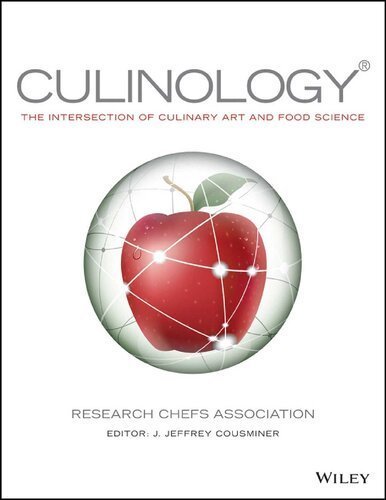
Culinology: The Intersection of Culinary Art and Food Science, ISBN-13: 978-0470481349
Original price was: $50.00.$19.99Current price is: $19.99.
Safe & secure checkout
Description
Description
Culinology: The Intersection of Culinary Art and Food Science, ISBN-13: 978-0470481349
[PDF eBook eTextbook]
- Publisher: Wiley; 1st edition (February 29, 2016)
- Language: English
- 432 pages
- ISBN-10: 047048134X
- ISBN-13: 978-0470481349
Culinology: The Intersection of Culinary Art and Food Science will demonstrate how the disciplines of culinary arts and food science work hand in hand in the research and development of new manufactured food products for the commercial, retail, and foodservice industries. It will be the authoritative source that will add value and relevance to this growing discipline and its practitioners. Integrating culinary arts with food science and technology, this book provides the best strategy for developing successful food products on a large scale. Real-world applications and business models ground the book and clearly illustrate how the concepts and theories work in business and industry.
Table of Contents:
Title Page
Copyright
Contents
Foreword to Culinology®: The Intersection of Culinary Art and Food Science
Preface: So What the Heck Is Culinology®, Anyway?
Acknowledgments
Chapter 1: The Business of New Product Development and the Role of the Culinology® Professional
Introduction: Why Is New Product Development Important?
Sources of Growth
The Food Industry
Food Development Today
Product Life Cycles
Technological Influences on New Product Development
Food Industry Segments
Food-at-Home
Food-Away-From-Home
The Supply Side of the Business
Food Ingredient Suppliers
All Other
Governmental Influences on New Product Development
The Food and Drug Administration and the U.S. Department of Agriculture
FDA
USDA
Societal Influences on New Product Development
Classification and Characterization of New Food Products
Line Extensions
Repositioned Existing Products
New Forms of Existing Products
Reformulation of Existing Products
New Packaging or Brand Labeling of Existing Products
New-to-the-Company Product Lines
New-to-the-World Creative Products
Sales and Marketing Influences on New Product Development
Restaurant Foods
Retail Grocery
Strategies for Global Product Development
The Role of the Culinology® Professional
Why Consider a Career as a Culinology® Professional?
Creating and Managing Product Development Teams
Project Manager
Product Developer
Consumer Insights
Packaging
Commercialization
Regulatory
Conclusion
Chapter 2: The Principles of Food Science
Introduction
The Nature of Matter
Types of Solids
Carbohydrates
Lipids
Proteins
Physical Structures (Amorphous and Crystalline) of Solids
Water
Water-Solid Interactions
The State of Water When Solids Are Present
Water Activity
Moisture Sorption Isotherms
Molecular Mobility
Heat-Driven Chemical Reactions in Foods
Gelatinization of Starches
Denaturation of Proteins
Gelation (Gel Formation)
Non-Enzymatic Browning Reactions
Heat as Individual Processes
Phase Transitions
Thermal Properties
Heat Transfer
Conduction
Convection
Thermal Radiation
Microwave Heating
Induction Heating
Chapter 3: Review of Cooking Techniques
Understanding Cooking Techniques from a Chef’s Viewpoint
Dry-Heat Cooking Methods
Baking
Roasting
Grilling
Broiling
Barbecue
Hot-Oil Cooking Methods
Sautéing
Stir-Frying
Pan-Frying and Deep Frying
Moist-Heat Cooking Methods
Boiling, Blanching, and Simmering
Poaching (Shallow and Deep)
Par-boiling and Steaming
En Papillote
Pressure-Cooking
Braising and Stewing
Immersion Cooking (Sous Vide)
Thickeners
Roux
Reductions
Starches
Gelatin
Pureeing
Conclusion
Chapter 4: Protein-Based Foods: Introduction and Red Meats
Introduction to Protein Chemistry
Nutritional Properties of Proteins
Protein Structure
Functional Properties of Proteins
Muscle Structure
Meat
Meat Production
Common Concerns in the Meat Industry
Bovine Spongiform Encephalopathy
Parasites: Trichina spiralis
Bacterial Concerns
Meat Cookery
Changes During Cooking
Meat Processing Ingredients
Conclusion
Chapter 5: Protein-Based Foods: Poultry
Introduction
Pre-Harvest Handling
Stunning
Killing and Bleeding
Scalding and Feather Removal
Evisceration
Chilling and Carcass Aging
Dressing Percentage
Poultry Types
Basic Cuts of Poultry
Poultry Meat Functionality
Further-Processed or Value-Added Poultry
Portioning
Ingredient Functionality and Flavor Enhancement
Forming Strategies
Conclusion
Chapter 6: Protein-Based Foods: Seafood
Introduction
Seafood Classifications
Market Forms of Finfish
Muscle Structure of Finfish
Identifying Freshness in Seafood
Rigor and pH
Fresh Finfish Protein Quality
Fat Content
Dark and Light Flesh
Adenosine Triphosphatase (ATPase) Test for Freshness
Preserving Seafood
Freezing
Canned Fish
Restructured Fish
Salting: Caviar and Preserved Roe
Treating Seafood with Phosphate
Economic Fraud and Species Substitution
Fish- and Shellfish-Derived Foodborne Illnesses
Shellfish
Shellfish Certification
Mollusks
Bivalves: Clams
Bivalves: Mussels
Bivalves: Oysters
Bivalves: Scallops
Cephalopods: Squid, Octopus, and Cuttlefish
Crustaceans
Other Seafood
Nutritional Value of Seafood
Protein Quantity and Quality
Fat Content
Mineral Content
Conclusion
Acknowledgments
Chapter 7: Protein-Based Foods: Vegetable Sources of Protein and Protein Complementation
Introduction: The Culture of Vegetarian Diets
Vegetable Sources of Protein
Legumes
Soybeans and Soy Foods
Grains
Conclusion
Chapter 8: Carbohydrate-Based Foods
What Are Carbohydrates?
Carbohydrates as an Ingredient: The Chef’s View
Grains, Legumes, and Starchy Vegetables
Flours
Refined Starches
Carbohydrates in Nutrition
Carbohydrates as Ingredients
Sugars
Monosaccharides
Disaccharides
Polyols
High-Intensity Sweeteners
Native Starches
Chemically Modified Starches
Starch Selection
Converted Starch Products: Maltodextrins and Corn Syrups
Gums
How to Use Gums
Types of Gums
Seed Gums
Tree Exudates
Bio‐Gums
Marine Gums
Plant Gums of Terrestrial Origin
Less Used Gums
Stabilizer Blends
Gelatin
Conclusion
Chapter 9: Lipid-Based Foods
Introduction
Historical Perspective
Fat Sources
Vegetable Oils
Animal Fats
Dairy Fat (Butter)
Lipid Structure
Processing of Fats and Oils
Nutrition and Essential Fatty Acids (EFAs)
Cholesterol and Saturated Fat
Functions of Fats and Oils in Food and Cooking
Lubricity
Intrinsic Flavor
Carrier/Promoter of Flavors and Colors
Mouthfeel
Emulsions
Heat Transfer
Baking
Frying
Rancidity
Conclusion
Chapter 10: Egg- and Milk-Based Foods
Working with Dairy and Egg-Based Products
Eggs
Composition of Eggs and Egg Components
Nutrition
The Value of Egg Products in Food Product Development
Coagulation, Thickening, Coating, and Binding
Emulsification
Foaming
Controlling Crystallization
Milk
Composition of Milk and Milk-Based Products
Nutrition
The Value of Dairy Products in Food Product Development
Milkfat Function
Water-Holding Capacity
Color and Browning
Emulsification
Gelation and Thickening
Whipping and Foaming
Cheese Applications
Applications
Culinology® Case Study in Product Development Using Egg Products
Culinology® Case Studies in Product Development Using Milk Products
Conclusion
Chapter 11: Fermentation
Introduction
History of Fermentation
Preservation of Perishable Products by Fermentation
Process of Fermentation
Lactic Acid Bacteria
Acetic Acid Bacteria and the Production of Vinegar
Alkaline Fermenters
Molds
Yeast
Alcohol Production
Beer-Making Ingredients
The Science of Beer-Making
Making Wine
Champagne and Other Sparkling Wines
Wine Fermentation
Dairy Fermentations
Bread
Meat Fermentation
Fish Fermentation
Vegetable Fermentation
Coffee Fermentation
Soy Fermentation
Vanilla Fermentation
Biotechnology Applications in Fermentation
Vitamin Production
Industrial Chemicals
Conclusion
Chapter 12: Food Additives
Introduction
Food Additives for Function
Sequestrants and Antioxidants
Bulking Agents
Colors
Emulsifiers
Phosphates
Chemical Leavening Agents
Antimicrobial Preservatives
Flavors
Natural and Artificial Flavorings
Flavor Enhancers
Acids
Sweeteners
Sodium Reduction
Conclusion
Chapter 13: Food Safety and Spoilage
Introduction
Food Safety
Hazard Analysis Critical Control Points (HACCP)
The Seven HACCP Principles
Identification of Hazards and Controls
Chemical Hazards
Physical Hazards
Biological Hazards
Process Temperature Control
Receiving Temperatures
Pre-Preparation Temperatures
Cooking/Pasteurization Temperatures
Hot Holding Temperatures
Cooling Temperatures
Cold Display Temperatures
Food Processes
Group I Foods
Group II Foods
Group III Foods
Group IV Foods
Group V Foods
Ingredient HACCP
The HACCP Recipe or Formula
The HACCP Flow Chart
The HACCP Plan
Process Validation
Food Spoilage
Signs of Food Spoilage and Food Industry Consequences
Ubiquitous in Nature
Types of Spoilage Microorganisms
Parameters of Food That Lead to Spoilage
Intrinsic Factors
Extrinsic Factors
Meat
Carcass Spoilage
Frozen Meat
Ground Meat
Cured Meats
Dried Meats
Cooked Meats
Retorted Meat Products
Cooked and Cured Perishable Meats
Cooked and Cured Shelf‐Stable Meat Products
Fish and Seafood
Fish Spoilage
Spoilage Microorganisms
Poultry
Frozen Chicken
Cooked Poultry Products
Dried Poultry Meat
Vegetables
Raw Vegetables
Processed Vegetables
Dried Vegetables
Fermented and Acidified Vegetables
Fruits
Fresh Fruits
Frozen Fruits
Canned Fruits
Dried Fruits
Fruit Juices, Concentrates, and Preserves
Fermented and Acidified Fruits
Spices and Herbs
Cereal Products
Processing and Harvest
Dough-Based Products
Nuts and Legumes
Legumes
Eggs and Egg Products
Shell Eggs
Liquid Eggs
Dried Eggs
Milk and Dairy Products
Pasteurized Milk and Cream
Shelf-Stable Milk
Concentrated Milk Products
Dried Dairy Products
Butter
Fermented Milk
Oil-Based Emulsified Dressings
Sugar, Syrups, and Honey
Conclusion
Chapter 14: Shelf-Life Extension
What Is Shelf Life?
Shelf-Life Labeling
Changes in Foods During Storage
Biological Changes
Chemical Changes
Color Changes
Flavor Changes
Nutritional Quality
Physical Changes
Other Factors Influencing Shelf Life
Intrinsic Factors
Extrinsic Factors
Analyzing and Predicting Shelf Life
Monitoring Effectiveness of Food Preservation
Conclusion
Chapter 15: Food Packaging
Introduction
Definitions and Vocabulary
What Is Packaging?
Packaging Definitions
The Functions of Packaging
A Brief History of Packaging
The Packaging Supply Industry
Product Distribution
Food and Beverage Distribution
Foodservice Distribution Channels
Retail Grocery Distribution
Food Science, Food Technology, and Culinology®
Microbiological Safety
Package Materials
Paper, Paperboard, and Corrugated Fiberboard
Metal
Glass
Plastics and Plastic Packaging
Package Testing Principles and Protocols
Economics
Environmental Impact
Sustainable Packaging
Further Examples of Current and Future Trends in Food Packaging
Conclusion
Resources
Chapter 16: Developing Nutritious Food Products
Introduction: Overview of Health, Well-Being, and Healthy Eating
Our Changing Understanding of Nutrition, Food, and Health
Basic Nutrition Principles and Rationale
Nutritional Analysis Software
Ingredients: Nutrition and Function
Protein
Lipids
Carbohydrates
Dietary Fiber
Resistant Starches
Water
Micronutrients: Vitamins and Minerals
Health Issues and Trends
Nutrition for Special Groups
Healthy Cooking Approaches and Diets
Allergens
Culinary Nutrition News
Conclusion
Chapter 17: Sensory Evaluation
Introduction
The Product Development Chef and Sensory Evaluation
Technical Aspects and Applications of Sensory Evaluation
The Five “In” Steps of the Product Development Pathway
Sensory Methods
Qualitative Consumer Research
Quantitative Consumer Research
Preference Tests
Consumer Acceptance Tests
Measuring Consumer Emotion about Foods
Sensory Discrimination Tests
Sensory Descriptive Analysis
Basic Sensory Attributes
Minimizing Errors in Sensory Measurements
Applications of Sensory Analysis in Food Product Development
Step 1: How Do People Think? What Do People Want in a Pizza?
Step 2: What Works in Today’s World of Pizza? Evaluating Many Products to Discover Patterns
Step 3: Nature Reveals Her Secrets: Building and Using the Product Model
Conclusion
Chapter 18: Culinology® Applications in Food Processing—From the Chef’s and Food Scientist’s
Introduction: Today’s Case for Processed Foods—Scientific and Culinary Perspectives
Effects of Processing on Nutrient Retention
Traditional Food Processing Technologies
Preparation and Size Reduction
Minimally Processed Fresh foods
Thermal Processing
Chilling and Freezing
Dehydration
Concentrated and Condensed Foods
Osmotic Preserves (Jams, Jelly, Preserves)
Food Extrusion
Specialized Processing Technologies
Cook-Chill and Sous Vide
Irradiation
Other Advanced Technologies
Commercial Meat and Poultry Processing
Marination
Marinade Types
Conclusion
Chapter 19: Commercializing the Culinary Gold Standard
Introduction
When to Launch?
Where to Launch?
Who is going to buy my product?
How am I going to do it (successfully)?
Product Development: The Benefits of Using a Proven Process
The Product Development Process
Identifying a Need
Defining the Vision
Collaborative Marketing
Market Opportunity Assessment
Project and Product Statements
What Is a Gold Standard, and How Is It Developed?
Product and Process Development
Developing Specifications
Scale-Up Testing
Product Launch
Market Testing
Product Rollout
Financial Evaluation: An Ongoing Exercise
Post‐Launch Evaluation
Product Optimization
Improvements Directed by PLE
Competitive Pressures
Impact of Economic and Cultural Change
New Technology and Packaging
Life Cycle: Process Improvements
Conclusion
Index
EULA
Research Chefs of America (RCA) was founded in 1996 and currently includes more than 2,000 members. RCA is comprised of chefs and food scientists working in food manufacturing, chain restaurants, hotels, ingredient supply houses, consulting and academia. Their membership also includes other food professionals in R&D, sales, marketing, manufacturing, distribution, and the media. RCA is headquartered in Atlanta, Georgia.
What makes us different?
• Instant Download
• Always Competitive Pricing
• 100% Privacy
• FREE Sample Available
• 24-7 LIVE Customer Support


Reviews
There are no reviews yet.