

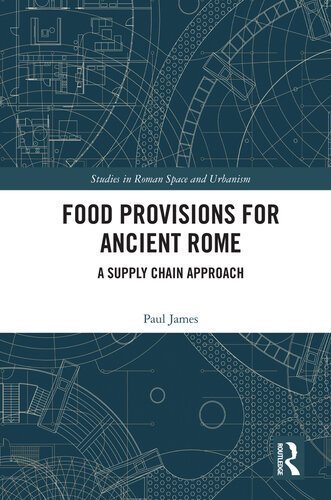
Food Provisions for Ancient Rome 1st Edition by Paul James, ISBN-13: 978-0367143398
Original price was: $50.00.$14.99Current price is: $14.99.
Safe & secure checkout
Description
Description
Food Provisions for Ancient Rome 1st Edition by Paul James, ISBN-13: 978-0367143398
[PDF eBook eTextbook]
- Publisher: Routledge; 1st edition (November 30, 2020)
- Language: English
- 210 pages
- ISBN-10: 0367143399
- ISBN-13: 978-0367143398
This book defines the processes used for delivering a range of food items to the city of Rome and its hinterland from the first century AD using modern supply chain modelling techniques.
Table of Contents:
Cover
Half Title
Series Information
Title Page
Copyright Page
Contents
List of figures
List of tables
Acknowledgements
1 Introduction
Grain and its significance
The annona
The model
Notes
2 Supply Chain Management
The supply model
SIPOCC analysis and flowcharts (process mapping)
The role of the state
Notes
3 The model – products, area of supply, population, and diet
Road freight and freight cost ratios
The drawing area for supply of local goods
The population supplied
Diet and health
Suppliers
Summary
Notes
4 The products
Grain explained
Cereal (grain) processing
Wine and viticulture
Olive oil
Garum
Other imports
Total imports
Summary
Notes
5 Technology development
Milling technology
Animal-powered milling
Water milling
Major installations – Barbegal and Rome
The timing of the mill introduction to Rome
Summary
Notes
6 Losses in the supply chain
The definition of waste or losses
The situation in Rome – indicators of waste
Precautions against theft
The danger posed by fires
Political unrest due to grain shortages
The effects of flooding
Grain transport and handling
Packaging – the argument for packaged grain versus bulk
The size of the grain sacks
Postharvest losses (PHL) in the grain supply chain
Transfer to the ports in the supply country
The sea journey
Individual process losses
Cleaning grain
Losses during grain storage
Product movement losses
Other supply chain losses
The net demand for grain
Losses in the amphorae supply chain
Summary
Notes
7 Supply system analysis – core inputs
Customer expectations and system goals
The sailing season
Gross product demand
Summary
Notes
8 Supply system analysis – infrastructure
Ship sizes and berth capacity
Unloading incoming vessels
Port systems
Ports – Ostia
Ports – Puteoli
Ports – Portus and why it developed
Ports – The Claudian phase of development – Portus phase 1
Ports – Trajan’s infrastructure programs – Portus phase 2
Warehousing (the horrea)
Summary
Notes
9 Supply system – operational strategy
Philosophy of operation
Options for unloading arriving vessels
The Tiber River and the supply chain
Riverboats and options for loading
Tacitus and the SCM system
Towing requirements for the riverboats along the Tiber
Moving goods along the Tiber River
Coordination and management of the Tiber
Road freight – the alternative to the Tiber
The ports in Rome
Workforce and process
Summary
Notes
10 Conclusions
Bibliography – ancient sources
Bibliography
Index
Paul James was awarded his Doctor of Arts by the University of Sydney, Australia, in 2017 where he is currently further researching the topic of the Roman Supply Chain in preparation for a series of papers and another book. His original qualification as a chemical engineer, and his extensive work in supply chain management, has meant that he is a recognised authority on this subject. The current volume on the food supply for Rome was prepared using a combination of his extensive modern workplace expertise in conjunction with his studies of the situation in antiquity.
What makes us different?
• Instant Download
• Always Competitive Pricing
• 100% Privacy
• FREE Sample Available
• 24-7 LIVE Customer Support
Reviews
There are no reviews yet.