

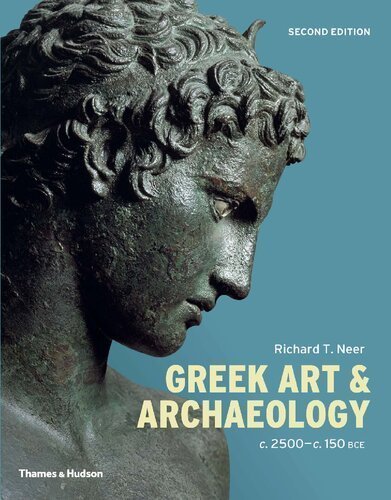
Greek Art and Archaeology 2nd Edition by Richard T. Neer, ISBN-13: 978-0500052099
Original price was: $50.00.$19.99Current price is: $19.99.
Safe & secure checkout
Description
Description
Greek Art and Archaeology 2nd Edition by Richard T. Neer, ISBN-13: 978-0500052099
[PDF eBook eTextbook] – Available Instantly
- Publisher: Thames & Hudson; Second edition (December 20, 2018)
- Language: English
- 408 pages
- ISBN-10: 0500052093
- ISBN-13: 978-0500052099
Visually stunning, now with wider context.
This is the text that sets a new standard in its field with striking visuals, fascinating reconstructions, accessible prose, and coverage of the wider Greek world. The Second Edition of Greek Art and Archaeology extends student understanding of Greek art in history through richer archaeological context and expanded coverage of both the earliest Bronze Age and latest Hellenistic periods.
Table of Contents:
Front Matter
Title Page
Copyright
Brief Contents
Contents
Preface
The Plan of the Book
New in this Edition
Instructor Resources
Acknowledgments
Introduction
Some Basic Concepts
Chronological Overview
1. Crete and the Cyclades to the Late Bronze Age
Chronology and Background
Greeks and Pre-Greeks
Troy II
The Coming of the Greeks
The Cyclades in the Early Bronze Age
The Cycladic Cultures
Marble Figurines
Minoan Crete to the End of the Second Palace Period (LM IB)
Before the Palaces (EM I to MM IA)
Minoan Palaces
Palace Architecture
Palace Craft Production
Seal-Stones and Jewelry
Wall Painting
Iconographies of Power
Bull Games
The Cyclades in Late Cycladic I (LC I): Thera
The Problem of Chronology
Xeste 3
The West House
Summary
2. Greece and the Mycenaean World to c. 1100 BCE
The Coming of the Greeks
Early and Middle Helladic
Kolonna
Middle Helladic Burials
Middle Helladic Pottery
The Shaft Grave Era (Middle Helladic III–Late Helladic I)
The Shaft Graves at Mycenae
Contacts with Crete and the Near East
Pottery
Messenia and Tholos Tombs
The Mycenaeans on Crete
The Emergence of Palace Society (Late Helladic II–IIIA/ Late Minoan IB–IIIA)
Mainland Palaces
Mycenaean Burials: From Tholos Tombs to Chamber Tombs
The High Point (Late Helladic IIIB)
Mycenaean Citadels
Wall Painting
Mycenaean Seals
Pottery
Palace Economy
Palace Religion
A Mycenaean Kingdom?
A Trojan War?
Fall and Decline (LH IIIC)
The Collapse of the Palaces
The Sea Peoples
After the Collapse
Summary
3. Geometric Greece, c. 1100–c. 700 BCE
The Mycenaean Aftermath
Iron
Eastern Contacts
The Case of Lefkandi
The City State
Pottery: Style
Pottery and Society at Athens: Style in Context
Tending Tombs, Worshiping Heroes
Sanctuaries
The First Temples
Why Temples?
Interstate Shrines
Gifts to the Gods
Bronze Figurines
Tripods
Gifts, Writing, and Tradition
Literacy and Storytelling
The Alphabet
Stories in Art
Summary
4. The Protoarchaic Period, c. 710–c. 600 BCE
Hoplites
Migration and City Planning
The Greeks Overseas
City Planning
Indigenous Peoples
Metapontion and the Akhaian Model
Metal and Votives
Tripods and Cauldrons
From Cemetery to Sanctuary
Myth and Narrative
Creative Misunderstandings
Iconography
Pottery
Luxury and the East
Corinth
East Greece and the Islands
Attica
Inscriptions
The Dedalic Style
Sculpture
Technique
Statues as “Signs”
Cretan Beginnings
The First Korai
The First Kouroi
Conclusion: Monsters and Noble Bastards
Summary
5. Archaic Architecture, Coinage, and Luxuries, c. 600–c. 520 BCE
Temples: Form, Function, Technology
Egyptian Masonry
Terracotta Roof Tiles
The Politics of Building
The Orders: A Brief History
Doric
Syracuse
Thermon
Corfu
Athens
Selinous
Ionic
Naxos
Samos
Ephesos
Why Orders?
Coinage
Lydia and Electrum
Iconography and Function
Metalware
Pottery
Lakonian
Corinthian
Attic
Caeretan Hydriai
Summary
6. Early Archaic Sculpture, c. 600–c. 520 BCE
Materials, Formulae, and Style
Variations in Style
Sculpture in Context
The Ideology of Kouroi
Kouroi at the Ptoion
Kouroi in Attica
Kouroi as Individuals
Attic Korai
Relief: Attica and Elsewhere
Other Sculptural Types
“Draped Kouroi”
Seated Figures
Groups
Nikai
Terracotta
Large Terracottas
Small Terracottas
Bronze
Summary
7. Case Study: Olympia and Delphi, c. 900–c. 480 BCE
Panhellenic versus Regional Sanctuaries
Olympia
Altars, Temples, Stadiums
Treasuries
Small Finds
Sculpture
Delphi
The Oracle
Early History
Votives: Sculpture and Small Finds
Architecture and Architectural Sculpture
The Siphnian Treasury
The Alkmaionid Temple and the Athenian Treasury
Summary
8. Archaic into Classical, c. 520–c. 470 BCE
Freestanding Sculpture
The Question of Bronze
Bronzes Large and Small
Marble: Kouroi
Marble: Korai
Terracotta: Large and Small
Athens and the Early Democracy
City Planning
Money
Athenian Pottery
The Invention of Red-Figure
The Birth of Pictorial Space
The Pioneers, Portraits, and Democracy
Erotica
Greeks and Persians: A Love–Hate Relationship
Before 480
The World Crisis
After 480
Summary
9. Early Classical, c. 480–c. 440 BCE
Wall Painting
Architecture and Urbanism in Sicily
Temples
Town Planning
Architectural Sculpture
The Temple of Zeus at Olympia
Temple E at Selinous
The Ludovisi Throne
Freestanding Sculpture
The Delphi Charioteer
The Motya Youth
The Taras Goddess
Groups
The Artemision God
Argive Sculpture and the Riace Bronzes
Chryselephantine (Gold and Ivory)
Summary
10. Case Study: Cyrene and Paestum
Cyrene
Myths of Origin
Sanctuaries and Urban Space
Sculpture: Styles and Signs
Paestum
The Archaic Period
The Classical Period
Coda: The Romans
Summary
11. Case Study: Athens and the Akropolis, c. 480–c. 404 BCE
Athenian Democracy
Rebuilding the City
New Walls
The Agora
The Parthenon
The Propylaia
The Temple of Athena Polias (Erechtheum)
The Temple of Athena Nike
Summary
12. High Classical, c. 440–c. 400 BCE
The Art of Theater
The Art of Imitation: Painting and Pottery
The Art of Death: Graves and Memorials
Tomb Sculpture outside Athens
Burial and Society at Athens
Classical Athenian Grave Reliefs
The Art of War: State Commissions
The Peloponnesian War: Sculpture
The Peloponnesian War: Architecture
The Carthaginian War: Sieges and City Planning at Syracuse
The Carthaginian War: Sicilian Coinage
The Art of the Self: Portraiture
Satrapal Coins
Sculpted Portraits
Summary
13. Late Classical, c. 400–c. 323 BCE
Arts of Death and Drinking: Pottery, Metalware, and Mosaic
Pottery
Metalware
Mosaic
Architecture
Private Houses
Priene
Personal Religion and New Gods
Asklepios: A “New God” in Athens
The Arkhinos Relief and Personal Saviors
The Temple of Asklepios at Epidauros
The Great Masters
Praxiteles: Reimagining the Body
Lysippos
Trends in Freestanding Sculpture
Humanizing the Gods: The Piraeus Athena
Individuals and Types: The Olympia Boxer
What Is Greek? The Cyrene Prince
The Antikythera Youth
Other Sculpture (Non-Architectural)
Terracottas
Small Bronzes
Athenian Grave Reliefs
Dynasts: Tombs and the Iconography of Power
The Nereid Monument
The Mausoleum of Halikarnassos
Macedon and Alexander the Great
Summary
14. The Hellenistic World, c. 323–c. 100 BCE
Macedonian Tombs
Portraits: The Royals and the Rest
Cosmopolitanism
Religion: New Gods and Old
Personifications
Saviors
New Gods
Philosophy: The Care of the Self
Architecture and City Planning
Temples
Palaces
Civic Architecture
Painting and Mosaic
Sculpture
The “Museum Effect”
New Functions, New Bodies
Small Terracottas
Pergamon and Hellenistic Baroque
Coda
Summary
Glossary
Further Reading
Sources of Quotations
Sources of Illustrations
Index
What makes us different?
• Instant Download
• Always Competitive Pricing
• 100% Privacy
• FREE Sample Available
• 24-7 LIVE Customer Support



Reviews
There are no reviews yet.