

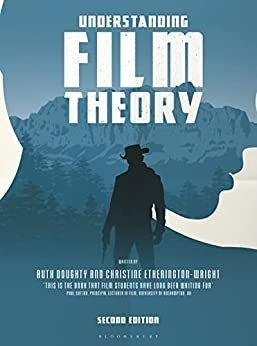
Understanding Film Theory 2nd Edition by Ruth Doughty, ISBN-13: 978-1137528230
Original price was: $50.00.$14.99Current price is: $14.99.
Safe & secure checkout
Description
Description
Understanding Film Theory 2nd Edition by Ruth Doughty, ISBN-13: 978-1137528230
[PDF eBook eTextbook]
- Publisher: Bloomsbury Academic; 2nd edition (September 4, 2017)
- Language: English
- 325 pages
- ISBN-10: 1137528230
- ISBN-13: 978-1137528230
This essential core textbook provides an approachable and extensive introduction to film theory, written by two highly experienced senior lecturers. Bringing a fresh, contemporary and accessible approach to what is often perceived to be a challenging and old-fashioned area of film studies that requires time and effort to grasp, the text illustrates why theory is important and demonstrates how it can be applied in a meaningful way. The book’s sixteen chapters are clear and comprehensive and provide an insight into the main areas of debate, using clear definitions and explaining complex ideas succinctly.
The ideal entry point for any student studying film, the book is designed for use on courses on film theory on undergraduate and postgraduate degree programmes within film, cinema, media and cultural studies.
New to this Edition:
– An expanded introduction, plus a new chapter looking at Adaptation
– Contemporary case studies exploring popular and topical films, such as The Hunger Games (2012), Blue is the Warmest Colour (2013) and The Lego Movie (2014)
– An expanded introduction, plus a new chapter looking at Adaptation
– Additional genre-based case study on the British Gangster film
– Additional actor-basedcase study on Ryan Gosling
– A greater focus throughout on the relevance of film theory to students undertaking practical film degrees and units
Film theory has a reputation for being challenging. Often requiring time and effort to fully grasp it and seeming rather old-fashioned, it can be difficult to approach the subject with enthusiasm and appreciate its relevance to modern day.
Understanding Film Theory aims to disassociate theory from these connotations and bring a fresh, modern and accessible approach to the discipline. Now comprehensively updated in a second edition, the book’s sixteen chapters – including a new chapter on Adaptations – continue to provide an insight into the main areas of debate. Taking the application of theory as its central theme, the text incorporates a number of innovative features: ‘Reflect and Respond’ sections encourage readers to engage critically with theoretical concepts, while seminal texts are concisely summarised without oversimplifying key points.
Throughout the book the authors illustrate why theory is important and demonstrate how it can be applied in a meaningful way, with relevant case studies drawn from both classic and contemporary cinema including: Once Upon a Time in the West (1968), Run Lola Run (1998), The Hunger Games (2012), Blue is the Warmest Colour (2013) and The Lego Movie (2014). Additional case studies address key genres (the British Gangster film and the musical), film movements (Dogme 95), individual actors (Ryan Gosling, Judi Dench and Amitabh Bachchan) and directors (Alfred Hitchcock and Guillermo del Toro).
Understanding Film Theory is an approachable and extensive introduction to film theory. It is the ideal entry point for any student studying film, using clear definitions and explaining complex ideas succinctly.
Table of Contents:
Cover
Title Page
Copyright
Contents
List of illustrations
Acknowledgements
Introduction
1. Auteur Theory
Case study: Alfred Hitchcock
Case study: Guillermo del Toro
2. Adaptations
Case study: The Hunger Games (Gary Ross, 2012)
3. Genre Theory
Case study: The British Gangster Film
Case study: The Musical
4. Formalism
Case study: Lola Rennt/Run Lola Run (Tom Tykwer, 1998)
5. Structuralism and Post-Structuralism
Case study: Once Upon a Time in the West (Sergio Leone, 1968)
6. Marxism
Case study: The Lego Movie (Phil Lord & Christopher Miller, 2014)
7. Realism
Case study: Dogme 95
Case study: The Act of Killing (Joshua Oppenheimer, 2012)
8. Postmodernism
Case study: Moulin Rouge! (Baz Luhrmann, 2001)
9. Psychoanalysis
Case study: Oldboy (Chan-Wook Park, 2003)
10. Feminism
Case study: Frozen (Chris Buck and Jennifer Lee, 2013)
11. Masculinity
Case study: Ryan Gosling
12. Queer Theory
Case study: Blue is the Warmest Colour (Abdellatif Kechiche, 2013)
13. Race and Ethnicity
Case study: Django Unchained (Quentin Tarantino, 2012)
14. Postcolonial and Transnational Cinemas
Case study: Avatar (James Cameron, 2009)
15. Stars
Case study: Amitabh Bachchan
Case study: Dame Judi Dench
16. Audience Research and Reception
Case study: Tartan Video
Conclusion
Filmography
Index
Ruth Doughty is the Programme Leader in Film Studies at Liverpool John Moores University, UK.
Christine Etherington-Wright is Senior Lecturer and Course Leader for the BA Film Studies at the University of Portsmouth, UK.
What makes us different?
• Instant Download
• Always Competitive Pricing
• 100% Privacy
• FREE Sample Available
• 24-7 LIVE Customer Support


Reviews
There are no reviews yet.